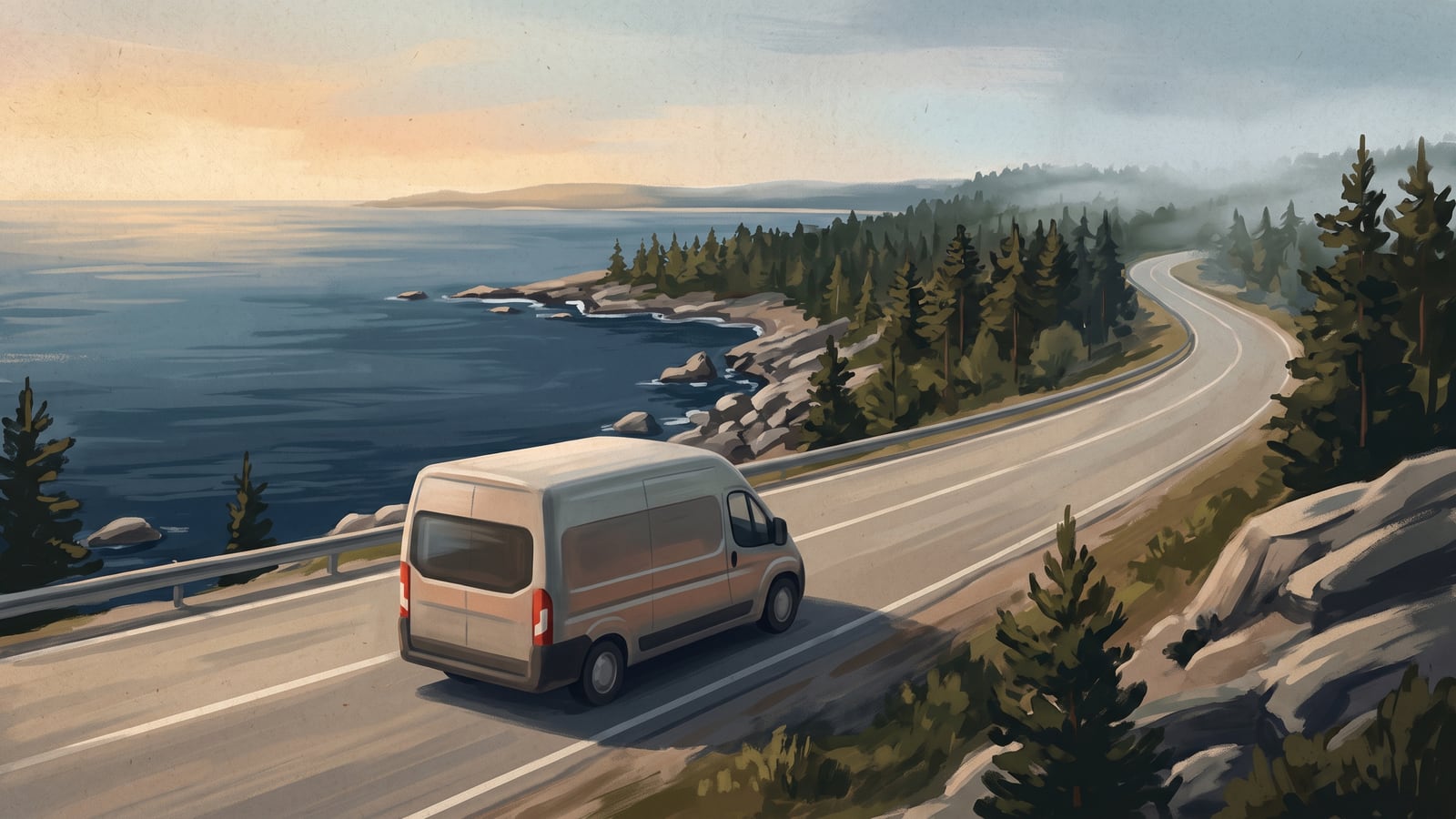
There's no single best season for touring the Finnish and Swedish Gulf of Bothnia coasts. If long daylight matters most to you, start with summer dates. If you've got a reason to accept more uncertainty and can change plans on the fly, spring or autumn might suit you better. Winter is a specialist choice — go only if you have a winter-specific reason, verify everything carefully, and build in strong backups.
A season label tells you roughly what to expect, nothing more. It won't predict the weather, road conditions, or which services will be open on your actual trip. Meteorological seasons track temperature patterns, and their timing shifts year to year. In Sweden, the official start of a season is only confirmed after the fact, and conditions at nearby weather stations can still differ from your route.
This is written for independent campervan and motorhome travellers weighing a broad touring period. If you're touring by caravan, car, or motorcycle, the same method works. Adjust it for your vehicle and weather exposure, as well as who's travelling with you.
The short answer
Which season fits you comes down to two things: how much you value daylight, and how easily you can delay, wait, or change your stops.
| Decision point | Summer-labelled dates | Spring or autumn | Winter-labelled dates |
|---|---|---|---|
| Daylight priority | Strongest starting point for long light | Fine when something else matters more than daylight | Needs checking for your exact dates and locations |
| Weather uncertainty | Still needs current forecasts, warnings, and road checks | Calendar and inland assumptions may not hold on the coast | Broad labels leave the least room for guesswork |
| Flexibility and contingencies | Stay responsive despite the daylight margin | Be ready to change timing, stops, or route | Plan a credible delay, reroute, and lawful backup |
| Verified services | Confirm anything essential | Poor fit if you're depending on unverified services | Essential services and restrictions need direct confirmation |
| Traveller, vehicle, and budget fit | Often the simplest daylight-led shortlist | Can suit your timing or budget if flexibility is affordable | Contingencies need to fit your actual party, vehicle, and budget |
Summer's the clearest default when daylight leads your decision. Spring and autumn are conditional choices, worth it when something else matters more. Winter only makes sense if your reason for going then justifies the extra planning it demands.
Three seasonal fits
These aren't a ranking of destinations or routes. Each one describes a different fit between what you want and how much uncertainty you can absorb on the Finnish and Swedish coasts.
Summer: daylight first
Start here if you want long daylight around stops, meals, and arrival tasks. Midsummer light in Finland is substantial, and Swedish guidance shows the pattern changes with latitude — so no single figure describes the whole coast.
Check your dates at both the northernmost and southernmost points in your plan. More light can make the itinerary easier to arrange, but it doesn't extend your concentration or guarantee safe driving. A bright evening isn't spare driving capacity if you're tired.
Summer isn't a promise of dry weather either. Swedish national climate data shows rain falls year-round, with the largest amounts in summer and autumn. Summer rain can often arrive as short, heavy showers. That's national context, not a forecast for your route — check live conditions for the actual place and day.
Summer works badly if your plan assumes any of this:
- Long daylight removes the need for current weather and road checks.
- The driver can keep going because it's still light out, even while tired.
- An essential service or accessibility arrangement will be there without you confirming it first.
Spring or autumn: flexibility first
Spring or autumn can make sense when your timing, preferences, or budget matter more to you than maximum daylight. But only choose one of these windows if you can actually change your route, stops, or timing when local conditions shift.
On the Finnish coast, the sea can slow winter's retreat and stretch spring out longer than the calendar suggests. A date on a calendar or an inland forecast can't tell you the coastal temperature, snow cover, or road condition — you need information for the actual places and dates you're travelling.
For autumn, Swedish climate data supports planning for real rain exposure. It doesn't mean every autumn trip will be wetter than every summer or spring one.
No general opening pattern for ferries, campsites, or other seasonal services has been established here. Confirm anything essential directly. This stretch suits you badly if your itinerary depends on fixed connections with no backup, or if weather exposure and accessibility needs leave little room to adapt.
Budget can factor into the choice, but there's no reliably "cheapest season." Ask instead whether your budget can handle flexible bookings, changed stops, or a backup plan.
Winter: purpose first
Pick winter dates only if you have a specific reason to go then, and you're ready to plan around what that costs you in flexibility. Daylight varies by date and latitude, and how usable that light or darkness actually is depends on conditions too — there's no single Gulf-wide figure that works.
Winter leaves the least room for assumptions. Before you rely on the plan, confirm a few things directly: daylight for your exact locations, current warnings and road conditions, and whether essential services and any restrictions apply. Check that your vehicle and party can actually handle it. You also need a credible way to wait, reroute, or fall back on a lawful alternative.
This can't tell you what tyres, heating, or equipment you need. Nor can it determine how much range to plan for or what your licence, accessibility setup, or route can handle. Check each of those with the right authority, provider, or manufacturer guidance for your situation.
Winter is a bad default if vehicle suitability, permission, or essential services are still uncertain, or if your party can't absorb delays or big changes. No article can make the go-or-wait call for your driver, vehicle, and route on the day.
Take a hypothetical traveller weighing an ordinary summer tour against a winter trip tied to a personal event. Summer's the simpler choice if daylight is what matters most. Winter stays on the table because the event matters — but only if confirmed services, a lawful backup, and the flexibility to wait or reroute make it workable.
How the choice changes a day
These situations are hypothetical. They illustrate the method — they aren't field reports, representative weather samples, or route recommendations.
A Swedish daylight choice
A couple is choosing between midsummer and early autumn on the Swedish coast. They like relaxed arrival times but don't want a rigid schedule.
Midsummer fits their main priority — the extra daylight gives them more room around arrival tasks. Early autumn could still work if something else mattered more to them, but they'd need to keep stops and timing easier to change.
Neither choice comes with a promise of dry weather. Before and during the trip, they check SMHI warnings and forecasts and Trafikverket traffic information for the actual area and day.
A Finnish coastal choice
A motorhome traveller is choosing between an early spring departure on the Finnish coast and waiting until summer.
The spring label alone can't tell them much, since coastal influence can delay the season's progress. Summer offers stronger daylight, but still no guarantee on roads or weather.
They check daylight for their actual dates and locations, then confirm essential services directly. Before leaving, they check FMI warnings and Fintraffic's Traffic Situation service. Neither season label tells them the temperature, road condition, or what their vehicle can handle.
What the season label won't tell you
Four different sources answer four different questions.
A climate normal describes the reference climate for a place. SMHI uses 1991–2020 as its normal period for Swedish climate maps. That's useful background, but it can't forecast your actual dates.
A forecast tells you the expected weather for a specific place and time. A warning flags current or expected impacts. Road-information services add live reports on disruptions and conditions.
Even those have limits. Fintraffic notes that observations can be missing or wrong, and real conditions can differ from what's shown. Use these services to inform your decision — they don't decide whether you and your vehicle should keep going.
Meteorological season maps answer a different question again. Sweden's map updates daily, but the official start of a season is only confirmed after the fact, and nearby conditions can still differ. And daylight itself is a calculation based on your date and exact location — not something the word "summer" or "winter" hands you.
Check the actual trip
Once you've got a broad preference, replace the remaining guesswork in one pass.
- Shortlist a period by your daylight preference and how much plan-changing you can tolerate.
- Add your dates and your northernmost and southernmost stops. Get location-specific daylight figures from a reliable current source.
- Use FMI and Fintraffic in Finland, or SMHI and Trafikverket in Sweden — while planning, before you leave, and whenever conditions change.
- Confirm every essential ferry, campsite, or accessibility arrangement directly, and keep a lawful backup ready.
- If an official closure or instruction conflicts with your plan, stop when it's safe, wait, or reroute. Do the same if the driver can't concentrate or if vehicle suitability, route suitability, or permission remains uncertain.
Choose the two most plausible periods, then compare location-specific daylight for your intended dates before you book anything.
Where to go next
This sits in Routes and destinations, next to the route this season question applies to and the High Coast section within it. For what a season does to the people in the vehicle, see the four-part seasonal checklist for Finland and Sweden, and if the answer turns out to be winter, tyre rules, road conditions and warnings. The wider Road touring section covers planning, routes, rules and overnighting.
Your next step: write down your intended dates and your northernmost and southernmost stops, then look up daylight figures for those particular places from a current source. The coast is long enough that one figure will not describe both ends of it.