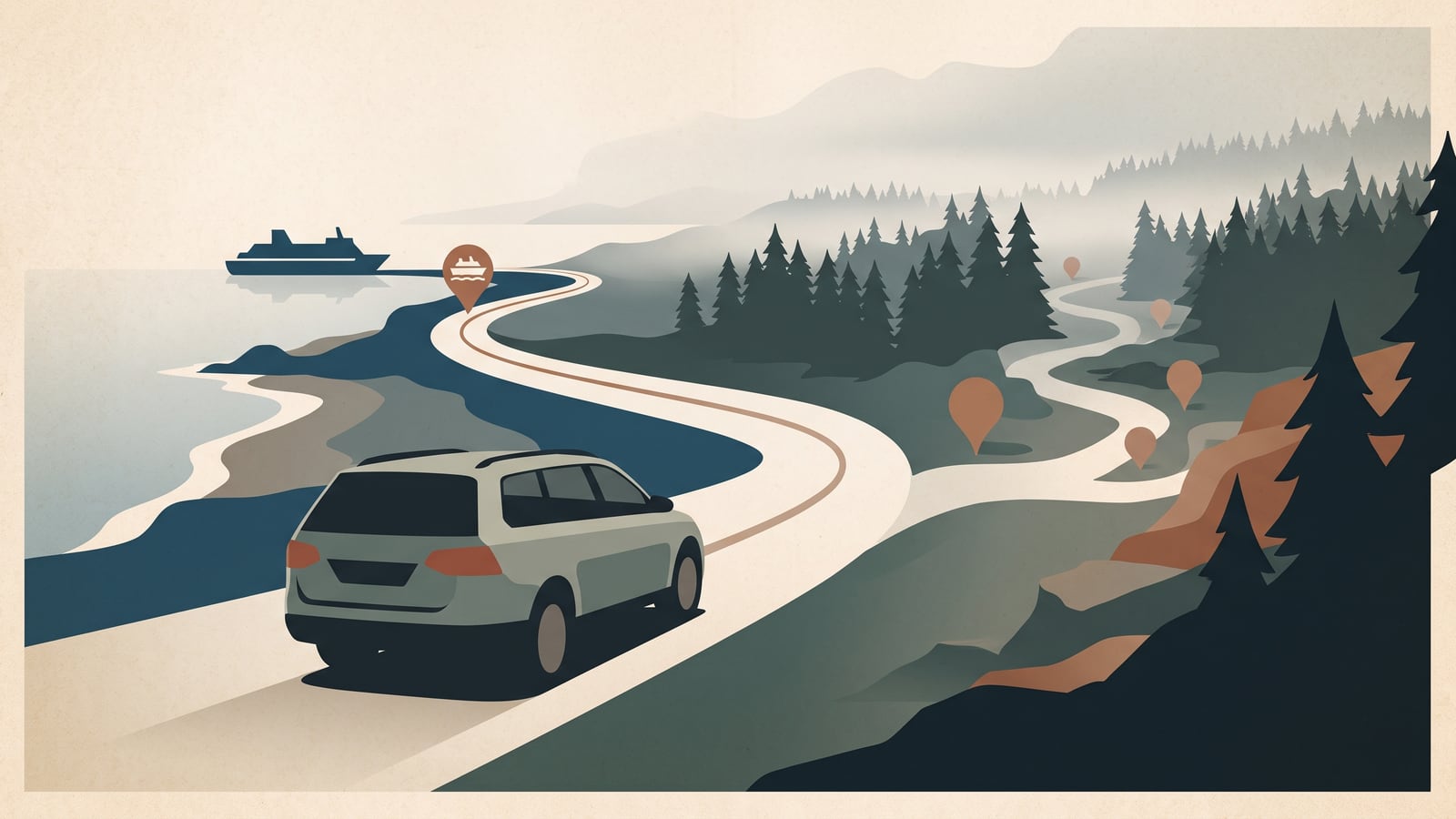
Book the parts whose loss would wreck later arrangements, as long as you can live with the current terms. Leave the replaceable stuff open when deciding later has no real downside and you've got credible alternatives.
That usually leaves you with a small set of deliberate commitments while the rest of the itinerary remains adaptable.
This is a planning method for independent campervan and motorhome tours. It also works for caravan, car, or motorcycle trips once you swap in your own travellers and vehicle.
Locking something in buys you certainty about that one option — but you accept its conditions and give up some room to change course. Staying flexible lets you respond to weather, tiredness, family routines, accessibility needs, or a different route. The trade-off is more decisions along the way, and the chance that your preferred choice is gone by the time you want it.
Neither approach settles the whole trip. A reservation or itinerary doesn't guarantee availability when you show up, a successful connection, legal permission, safe conditions, or that the route fits.
Start with what breaks
The real distinction isn't ferries versus overnight stops versus activities — any of those can be central to one trip and easily replaceable on another. What matters is what happens if you lose that particular option.
| Question | Book in advance | Leave flexible |
|---|---|---|
| What breaks if it disappears? | Makes sense when it would disrupt several later plans | Makes sense when another good option keeps the trip working |
| Can you reverse it? | Depends on the change, cancellation, refund, arrival, and vehicle terms | Avoids an early commitment, but your preferred option might vanish |
| How much is adaptability worth? | Less room to shorten the day or change route | More room to respond to how the day goes |
| Is a connection at stake? | Can protect a planned sequence — though it can't guarantee what happens next | Fine when a later decision won't threaten anything important |
| What's left to manage? | Track terms, declarations, arrival requirements, and a fallback | Have credible alternatives and a sensible point to decide |
Four questions cover most of it:
- What breaks if this option disappears?
- Is there another acceptable choice?
- Can I live with the actual terms?
- What still needs checking on the day?
The answers shift from one stage to the next. Tight funds might make cancellation risk the deciding factor. A child's routine might set the usable day, while another traveller's accessibility needs might make substitution hard. That's context you bring to the decision — no general rule can weigh it for you.
When booking helps
Lock something in when losing it would break an important fixed dependency — a connection you're relying on, an overnight you need before a timed departure, an activity tied to other plans. The category alone doesn't decide it.
Booking is a poor fit when you can't confirm the eligibility rules, vehicle declarations, permission, arrival requirements, or financial exposure involved. It also buys you little when several acceptable substitutes would keep the trip on track anyway.
What certainty buys
A reservation protects your chosen option under the provider's current terms. That can make everything connected to it easier to plan, and it cuts the number of decisions you're juggling at a demanding stage.
Its value comes from what it supports. If one crossing anchors several later stages, locking it in removes a real uncertainty. If one overnight has to happen before a fixed connection, securing it makes the whole sequence more workable.
The same type of booking can matter more or less depending on the trip. An overnight picked mainly because you like the location might stay perfectly replaceable when other decent options exist.
What commitment costs
Every booking narrows your choices. A shift in weather, pace, route, or traveller needs can leave you stuck choosing between a plan that no longer fits and the cost of changing it.
That cost depends on the actual terms — check what happens if you change or cancel before you treat a booking as useful certainty. Anything consequential also needs a fallback in case the planned sequence falls apart.
Watch for the moment when the only reason to keep going is not wanting to lose a booking. The commitment may carry a cost or other consequence. That doesn't determine whether continuing is still the right call.
When flexibility helps
Leave a choice open when another acceptable option can keep the trip working. That's usually true for stops, activities, and route stages that can shift without damaging an important connection or arrangement.
Flexibility requires a plan. It means carrying credible alternatives and knowing roughly when you'll pick between them. It doesn't guarantee your later option will be available, legal, accessible, right for your vehicle, or sensible in the conditions.
What adaptability buys
Staying open gives your travelling day room to breathe. You can stop earlier if you're tired, shuffle an activity around the weather, or bend the route to fit a family routine. You can also hold off committing when several alternatives would work but none of the current terms suit you yet.
Accessibility changes the calculation. If several days and options have been directly confirmed as workable for what you need, staying flexible can still make sense. If suitable assistance or provision is hard to replace on short notice, booking ahead protects something that matters more.
There's no universal cutoff here. It comes down to how much adaptability is worth to the people, vehicle, and trip involved.
What flexibility demands
The annoying part: you still have to decide later, maybe while you're already deep in the trip. Your preferred option might be gone, and a map pin you haven't checked isn't a real fallback.
Carry alternatives that could cover your travellers' and vehicle's essential needs. Decide upfront when you'll make the call — before starting that stage of the route, say. If you haven't identified a lawful, suitable, currently confirmed alternative, leaving the decision open risks exposing too much of the trip.
Flexibility also stops being the right call when losing the option would threaten a connection or accommodation you need. At that point, the apparent freedom just pushes a big decision closer to the deadline.
Three hypothetical days
The same tour can justify firm commitments in one place and open choices in another. These hypothetical situations show how the logic plays out.
A fixed crossing, flexible stops
Picture a family planning around a ferry crossing that everything else depends on. Several later plans hinge on reaching the other side on schedule, but they've got plenty of replaceable options for the overnight stops beforehand.
They book the crossing because it's the anchor. Before travelling, they confirm the carrier's terms, arrival requirements, and any declarations needed for their vehicle. The earlier stops stay flexible so they can call it a day sooner if things run long.
They also keep a backup plan for a missed connection. The booking protects their chosen sailing under its terms — it doesn't guarantee they'll reach the port on time or that onward travel will go smoothly. Any passenger protections that apply come with their own conditions too; they don't turn the whole itinerary into a promise.
An activity with several days
Now picture a couple who can do a timed activity on any of several days. Missing their first choice wouldn't touch their transport or accommodation at all.
Waiting gives them room to pick around the conditions. To make that work, they decide in advance when they'll check availability and what they'd accept as a substitute.
That changes if one traveller needs confirmed accessibility or assistance arrangements that are hard to replace. Then booking ahead protects something essential. They'd need direct confirmation that the provision meets their needs.
A booking you have to miss
A traveller has booked an overnight because it sets up the next day's connection. Partway through that stage, fatigue or an official warning makes continuing a bad idea.
The booking now costs them something — money, logistics, or both. But it's not an instruction to push on. They stop, wait, or reroute as needed, fall back on the plan they saved, and contact the provider once they're somewhere sensible.
Don't keep driving just to protect a booking when fatigue, warnings, closures, bad conditions, or an authority's instructions say the stage isn't safe to continue.
Checks that stay live
Read the actual terms — don't assume. The EU's general 14-day right to change your mind for covered distance and off-premises purchases has exceptions, including certain services arranged for specific dates. That general rule doesn't determine your individual rights to change, cancel, or get a refund. For a ferry, campsite, activity, rental, or accommodation, check the provider's current terms and the law that applies to your purchase.
Eligible passengers on covered EU ship services may have qualified reimbursement or rerouting rights when the carrier cancels — but the conditions and exclusions matter. A carrier making reasonable efforts to tell you about alternatives doesn't mean an alternative will work, or that the rest of your journey will go smoothly.
A few checks stay live no matter what:
- Confirm the provider's current eligibility rules, arrival requirements, and any vehicle declarations.
- Read the change, cancellation, and refund terms that apply.
- Check road rules for every country you'll drive through or transit — and for anything beyond the EU, check the relevant national sources too.
- Use the national meteorological and road authorities for current warnings before you leave and again at the point of use. Meteoalarm can help you find European warnings, but it's not making your live route decision for you.
- Make sure the route fits your vehicle, and that the right documents and rental permissions are in hand.
- Check what governs access, parking, overnighting, borders, and tolls wherever they affect your plan.
No booking system settles these for you. Your vehicle, route, countries, providers, and current conditions do.
Choose the anchor
Look at your current shortlist and find the one choice whose loss would disrupt the most later plans. Check its current terms and your fallback first.
If you can live with the terms, book that one. Leave the rest open wherever a credible alternative could still carry the trip.
Where to go next
This sits in Trip planning, next to how to leave breathing room around what you do book and building the multi-day plan itself. For the booking that most often turns out to be the anchor, see describing what will actually travel on a ferry, and for the overnight end of the question, serviced campsite or simple stopover. The wider Road touring section covers planning, routes, rules and overnighting.
Your next step: find the one choice whose loss would disrupt the most later plans, check its current terms and the fallback you'd use instead, and book only that one for now.